The Dietary Supplement Innovation Act, introduced by Rep. Harshbarger, would cap indefinite preclusion, require science-based review standards, and open FDA warnings to court challenge.
The trade association urges FDA to formalize flexible labeling practices, arguing that current ambiguity around DSHEA disclaimer placement is driving litigation risk and regulatory uncertainty.
The Council for Responsible Nutrition (CRN) has filed a citizen petition1 with FDA requesting formal clarification of how the Dietary Supplement Health and Education Act (DSHEA) disclaimer should be displayed on dietary supplement labels, citing longstanding ambiguity that the group says is creating compliance challenges and increasing legal exposure for manufacturers.2
The petition follows
Submitted by Venable LLP on CRN’s behalf, the petition centers on how the DSHEA disclaimer, required for structure/function claims, should be presented on product labels. Under existing regulations, the disclaimer must be prominently displayed and linked to claims, but interpretations of placement requirements have varied.
The association is urging FDA to explicitly confirm that:
CRN maintains that this approach reflects both longstanding industry practice and FDA’s historical enforcement posture, which has rarely required disclaimer repetition across multiple label panels.
“For more than 25 years, FDA has consistently reviewed and accepted this approach to labeling without objection,” noted Steve Mister, the trade association’s president and CEO. “Our petition simply asks the Agency to put into the regulation what has long been the practical and lawful standard in the marketplace.”
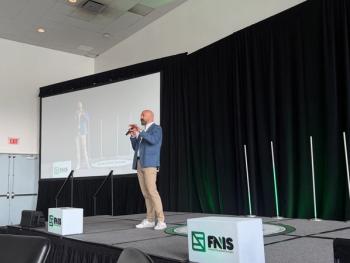
At SupplySide Connect New Jersey, Megan Olsen, senior vice president and general counsel at CRN, also
According to CRN, ambiguity in disclaimer placement has contributed to a rise in class-action litigation, with plaintiffs arguing that the full DSHEA disclaimer must appear adjacent to every structure/function claim.
The organization contends that these lawsuits exploit regulatory uncertainty rather than reflect consumer harm. FDA itself has acknowledged that the “each panel” requirement has been “rarely, if ever, enforced,” and has indicated openness to revising the rule to reduce unnecessary burden and label clutter.3
CRN argues that without formal clarification, companies face inconsistent compliance expectations, increasing both legal risk and operational complexity.
The DSHEA statute requires that structure/function claims be accompanied by a disclaimer stating that the product has not been evaluated by FDA and is not intended to diagnose, treat, cure, or prevent disease.
CRN asserts that the law requires the disclaimer to be “contained” within labeling, but does not mandate repetition across every instance of a claim. Instead, the group argues that linking claims to a single disclaimer satisfies both consumer transparency and statutory intent.
This interpretation aligns with what CRN describes as a “commonsense approach” that has been used across the industry for decades and provides adequate consumer understanding without excessive redundancy.
For finished product manufacturers, the outcome of this petition could have meaningful implications for label design, compliance strategy, and cost structure.
If FDA formalizes a more flexible approach:
Conversely, continued ambiguity could perpetuate litigation risk and inconsistent enforcement, particularly as labeling practices evolve alongside new product formats and claims.
FDA has not yet issued a formal rulemaking proposal but has indicated that revisions to disclaimer placement requirements are under consideration. In the interim, the agency is exercising enforcement discretion regarding the requirement for disclaimers to appear on every label panel, while maintaining expectations for proper linkage to claims.
CRN’s petition is intended to accelerate this process and provide regulatory certainty, particularly as companies navigate increasing scrutiny of labeling practices.
For the supplement industry, the issue underscores broader tensions between statutory interpretation, regulatory implementation, and legal risk, especially in areas where long-standing practices are being reexamined.
As FDA evaluates stakeholder input, the outcome could help define how DSHEA labeling requirements are applied in practice, potentially reshaping how manufacturers approach structure/function claims and disclaimer presentation across product portfolios.
References
1. Citizen petition on behalf of the Council for Responsible Nutrition requesting the FDA issue a direct final rule to confirm its interpretation of 21 C.F.R. § 101.93(d). Venable LLP. May 6, 2026. Accessed May 6, 2026.
2. CRN files citizen petition urging FDA to clarify DSHEA disclaimer placement for dietary supplements. Council for Responsible Nutrition. May 6, 2026. Accessed May 6, 2026.
3. Letter to the dietary supplement industry on the DSHEA disclaimer. US Food & Drug Administration. December 11, 2025. Accessed May 6, 2026.