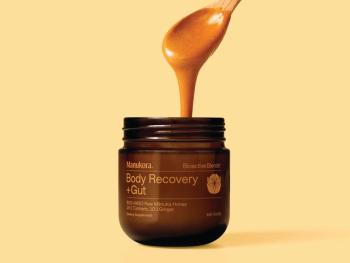
DolCas Biotech is featuring the turmeric-derived ingredient Curcugen in Mānukora’s Mānuka honey and Numin’s cognitive-support drink.
Regulatory controversy may continue to follow hemp CBD, vinpocetine, and kratom this year.
Every year, a batch of ingredients falls under intense regulatory scrutiny, and 2017 looks to be no exception. At the top of the list is kratom (Mitragyna speciosa), an herb native to Southeast Asia that delivers opioid-like effects. Some experts say kratom’s physiological effects help prescription-opioid users and heroin addicts wean themselves off their addiction. The Drug Enforcement Agency (DEA), however, recently indicated it views the herb as a threat to public safety.
In an announcement issued last August, the DEA said there “does not appear to be a history of use or other evidence of safety establishing that kratom will reasonably be expected to be safe as a dietary ingredient,” and that it therefore intends to classify two of kratom’s psychoactive constituents, mitragynine and 7-hydroxymitragynine, into the Schedule I list of banned substances under the Controlled Substances Act (CSA). The move, which would effectively place kratom on the same list of banned substances as heroin, is based on what the DEA called kratom’s “high potential for abuse,” as well as other negative health outcomes proposed by FDA, including hallucinations, nausea, respiratory depression, and more.
The Natural Products Association (NPA; Washington, DC), on the other hand, largely agreed with the DEA’s concerns into kratom’s safety and proposed action. Dan Fabricant, CEO and executive director of NPA, even highlighted the issue in a recent letter to President Trump, urging the new administration to support enforcement against kratom ingredients and products.
Another controversial ingredient to watch is vinpocetine, a synthetic ingredient produced from an alkaloid of the lesser periwinkle plant (Vinca minor). FDA took industry by surprise last year when it announced its “tentative” conclusion that vinpocetine does not qualify as a dietary ingredient, despite the agency acknowledging five separate new dietary ingredient (NDI) notifications for vinpocetine since 1997.
The agency’s reasoning? For one, FDA argued that vinpocetine fails to meet the definition of a dietary ingredient because it is not a vitamin, mineral, or amino acid; it is synthesized and is therefore not a constituent, extract, or derivative of an herb or botanical; and because there are no documented food uses of vinpocetine. The agency also said the ingredient was authorized for scientific investigation as a new drug in 1981, which would nullify vinpocetine’s status as a dietary ingredient under the investigational new drug (IND) provision of the Federal Food, Drug, and Cosmetic Act (FD&C Act).
Then there’s hemp CBD (cannabidiol), the longtime bad boy in the supplements space. CBD inspired a fresh wave of headlines in December when the DEA published a final rule in the Federal Register clarifying that "marijuana extracts" like CBD “will continue to be treated as Schedule I controlled substances.” While that announcement triggered a barrage of alarming media coverage suggesting CBD had suddenly become a Schedule I substance,
In a year guaranteed to bring change to the federal government with a new president, it’s hard to say for sure where CBD, vinpocetine, and kratom will be sitting twelve months from now.
Read more:
2017 Ingredient Trends to Watch for Food, Drinks, and Dietary Supplements:
Michael Crane
Associate Editor
Nutritional Outlook Magazine
over 9 years ago
Pet Food Trends in 2017: Clean Label, Healthy, and Premiumover 9 years ago
Sodium Reduction Strategies in 2017over 9 years ago
2017 Dietary Supplement Equipment Manufacturing Updateover 9 years ago
FTC Clamps Down on Homeopathic Products