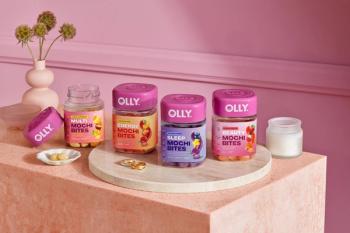
The four-formula line is Olly’s second retailer-exclusive launch this year, following the launch of a probiotic range in April.
Competent and Reliable Scientific Evidence (CARSE) is a requirement set by the Federal Trade Commission, but how the agency defined "competent" is unclear. Let's unpack what makes a research team competent.
Competent and Reliable Scientific Evidence (CARSE) is the requirement of the US Federal Trade Commission (FTC) for advertising claims substantiation of dietary supplements since 1998. It is clear that the “reliable” in CARSE relates primarily to the quality of the final evidence itself, while “competent” may refer to the people and procedures involved in generating this evidence. What is not clear is how the FTC or the courts define this “competence”. Evidence that appears to be reliable may not be so if produced by a research team that lacks the competence in specific functional areas needed to put together, conduct, and report a robust clinical trial.
The FTC’s Health Products Compliance Guidance (Dec 20, 2022) clearly defines CARSE as tests or analyses conducted and evaluated objectively by qualified experts, generally accepted in the profession to yield accurate and reliable results.1 One of the most popular and controversial requirements for reliable evidence is “two clinical trials for claim substantiation.” However, the FTC clarified in their 2022 Health Products Compliance Guidance that one good quality clinical trial is always necessary, but may not be enough to substantiate the claims being advertised based on the seriousness of the claims. We have suggested earlier that at least planning to do two clinical trials may actually work in the favour of supplement companies, regardless of what the FTC requires in most cases. According to Cooley’s 2023 analysis, replication of findings adds weight to substantiation, and studies must be designed, conducted, and interpreted by experts independent of marketing influence.2
However, this article is the first in the series to discuss only the “competence” and “qualifications” of researchers and the quality of the processes used for clinical trials. This is an important conversation to have so that all stakeholders are on the same page regarding the minimum prerequisites of such a research team, rather than relying on a subjective “generally recognized as competent and qualified” standard. While the courts have often cited the competence of the research teams substantiating health claims, they may not have adequately questioned FTC on the means of objectively evaluating such competence.
Such researchers could be in-house permanent staff of the supplement or ingredient brand, or outsourced academics, or contract research organizations (CROs). Opinion is divided about the independence of in-house staff vs an outsourced team. However, we disagree that an outside provider, like a university or CRO group, can claim to be free from bias just because they are not on the sponsor’s payroll. So, employment or mode of research funding may not be as good a measure of independence or competence as it is often touted.
While past experience in the health category does give an advantage to a provider over others because they may avoid obvious pitfalls, sponsors give undue weight to category experience or past publications when selecting a provider. In fact, selecting merely on the basis of past experience may reflect an over-reliance on someone else’s judgment to select that provider in the first or second instance. It is like selecting a restaurant merely on the basis of customer reviews.
The professions of clinical research and clinical practice may share some common qualifications, but every clinician is not necessarily equipped to plan and conduct reliable research. While there are only a few CRO providers in our industry that can boast of physicians on their design and ops teams, even that is only an indicator of their possible competence, not a true measure.
So if independence, past experience or medical training are not enough to judge competence, then what is? Let's unpack the functional expertise that may be needed in most situations to pull off most types of high-quality clinical trials for food supplements, vitamins, beauty-care, medical foods, and consumer health products in general. Considering the magnitude of the subject, we can only attempt to introduce it, leaving a deep dive to the next articles in this series.
What we call as a clinical trial design often begins with a shorter “study synopsis,” leading up to the full protocol and case record form. Considered by some as only procedures to fulfil the requirements of an Independent Review Board (IRB), the informed consent form and the investigators’ brochure serve much more than that. It may appear that a junior PhD student can easily handle these documents, but without alarming anyone too much, let’s just say that preparing these critical study documents, thus a well-planned study, requires a whole army of professionals drawn from different functional expertise. These include the investigator(s), of course, as well as the lab(s), project management, pharmacy, clinical data management, and statistics. FTC may not refer to them explicitly, but one can draw on several guidelines from the US Food and Drug Administration (FDA) and International Council on Harmonization of Pharmaceutical Data (ICH), notably the ICH’s 3rd revision of the Good Clinical Practices (GCP).
Most regulators, including FDA and EFSA, do not require investigators to be physicians for healthy volunteer studies. However, a medical person is recommended to oversee the safety of volunteers in even in such low-risk studies. Whereas, only clinicians may be mandated to investigate products that are condition-specific, or where special skills may be required for assessing condition severity or patient care. It can sometimes be a tough choice between the clinical experience and understanding of patient mindset, which only physicians have vs the enthusiasm and research-mindedness of PhD scientists. The FTC is silent on this topic, but our vote goes to any one of them who has demonstrated their competence to rapidly recruit and retain a certain type of study population and to effectively use the quality of life questionnaires or interpret lab reports as required by the study. It is the best of both worlds if there is a team of both types. Additionally, an investigational site with the least number of serious monitoring or audit findings in past similar studies plus high overall data quality would be our choice of a competent site.
Even with the most qualified investigators, the clinical research coordinator (CRC) remains the unsung hero of our journey. They are the backbone of all clinical operations and site management at the investigational site. While a hero, an inexperienced, incompetent, or uninspired CRC can also be the root cause of a failed site. Unfortunately, the requirements of CARSE are unable to objectively define the soft skills and technical competencies required of this important role. A life sciences background and some certifications in clinical research are welcome, but nothing beats people who have or can develop a flair for organization, data management, the informed consenting process, patient interaction and motivation, documentation, adverse event reporting, and finally a passion for research. Stakeholders, let us invest in building a community of young, motivated CRCs for driving high-quality consumer health research.
Not undermining any other project participants, the competence of the lab can really make or break even a well-designed study. A competent lab should have:
We did a deep dive on CRO lab competencies in 2021.3However, the newly released ICH E6(R3) guidelines (2025) expand the definition of competence to include Quality by Design, proportional risk management, decentralized trial capabilities, and data integrity systems.4
A comprehensive dialogue on specific competencies needed for CARSE may be missing or sparse. The qualifications of the other project participants to give reliable scientific evidence will be discussed in a follow-up article soon. Stay tuned, and good luck in planning your next high quality research study!
References