

News|Videos|September 23, 2026
Redefining Drug Preclusion: Legal Perspectives on the Dietary Supplement Innovation Act
Author(s)Todd Harrison, Erin McEvoy
Todd Harrison, co-chair of the FDA practice group at Venable LLP, details the Dietary Supplement Innovation Act's language, its unintended consequences, and what industry stakeholders should watch for.
Advertisement
Harrison argues that while reforming drug preclusion is worthwhile, the bill's attempt to define "substantial clinical trials" as either Phase 2 or Phase 3 trials is a significant misstep. Because Phase 2 trials could involve as few as 25 participants, he warns the standard could let a small, early-stage trial trigger up to 7 years of preclusion for an ingredient with real potential health benefits. He also flags drafting inconsistencies around the bill's 7-year inactivity clock, cautioning that vague statutory language carries new risk in the wake of the Supreme Court's Loper Bright decision.
Despite these concerns, Harrison highlights provisions he supports, including a new ability for companies to sue the FDA over warning letters. He also proposes an additional safeguard: a petition process allowing companies to show that a lower-dose use of an ingredient is safe for everyday consumption, even if a higher dose has drug-like therapeutic effects.
Partial transcript is below.
Erin McEvoy: Hello, everyone. I'm Erin McEvoy, associate editor for Nutritional Outlook, and I'm joined today by Todd Harrison, co-chair of the FDA group at Venable LLP, here to discuss more on the recently introduced Dietary Supplement Innovation Act, which is legislation that intends to modernize FDA's drug preclusion provision. Thank you for joining us today, Todd.
Todd Harrison: Well, thank you. Thank you for having me.
McEvoy: We appreciate your insights on this topic. Before we dive into the bill and your client alert on what stakeholders should know about it, in broad terms, what is the Dietary Supplement Innovation Act trying to accomplish, and is the drug preclusion framework the right place to focus on reform efforts?
Harrison: Well, I think it's, we'll start, I do think it's a, one place of reform that we, is needed, and the idea is to try to avoid preclusion lasting forever, and trying to define what is substantial clinical trials because FDA refuses to define substantial clinical trials. So I think, in that regard, it was a nice try. Unfortunately, they screwed it up, in my opinion. And I don't mean it in a harsh way, but they took language that was pretty broad, substantial clinical trials. Now, admittedly, that doesn't have any real meaning, but from a lawyer's perspective, I have arguments. Substantial clinical trials can mean 100 people. It can mean 200 people. They actually decided to define it as either Phase 2 or Phase 3 clinical trials. I actually would have no issue if it was just Phase 3 clinical trials. I have a real significant issue with Phase 2, because Phase 2clinical trials are broken up into two diff-, categorically outside of the regulations, but they cite the regulation, outside of the regulations there's Phase 2A and Phase 2B, but the regulations only discuss phase two clinical trials. So, under the regulation, a phase two clinical trials could be as small as 25 people in that trial. Well, if that's true, then a pharma company could start a trial with 25 people, you're precluded. But that's not substantial, in my mind. That's very small trial.
And so, are we really going to have a standard of 25 people and start being, allowing a, you know, at least 7 years of inactivity, potentially of inactivity, to preclude an ingredient from, that could potentially help other people with overall health and well-being, from being precluded? I think that was a, that was a tactical error, and the problem is, is that with the advent of Loper Bright, which is a Supreme Court case, we have to be exact in our language when we look at statutes because the courts will no longer defer to the agency, what is the best reading of the statute. So, if we're going to give words meaning, you, and you use those words, you're stuck with those words now. And the words they use was Phase 2 or 3. You can't do that. They would have been…
Now, if they wanted to say Phase 2B, at least 100 people totally enrolled, okay, that might have been a better solution. But they didn't do that. They just said Phase 2. So, to me, that was a big mistake. That was a strategic drafting error. And they should have It needs to be reconsidered going forward, because literally a very small Phase 2clinical trial, which is still a 2A, still a safety trial and could be big, very small, could be a that could end up precluding for another 7 years. So let's just say I isolate an interesting constituent of a botanical that would be considered an NDIN, and start investigating that. Am I going to really be able to preclude people on a small 2A study that ultimately I don't end up commercializing or even trying to go to a 2bB or even to a Phase 3 clinical trial? So I have concerns with that language.
Advertisement
Related to this article

Piping Rock Health Products has launched a 300-mg NMN gummy under its Vitafusion brand, arriving less than a year after the FDA reversed its position on whether the ingredient could legally be sold as a dietary supplement.

The Dietary Supplement Innovation Act, introduced by Rep. Harshbarger, would cap indefinite preclusion, require science-based review standards, and open FDA warnings to court challenge.

At the Future Nutra Innovation Summit, Sibyl Swift, PhD, founder and principal of Swift Strategy Group, discusses supplement oversight and unpacks why mandatory product listing divides the industry.
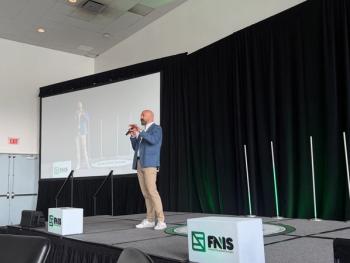
The inaugural Future Nutra Innovation Summit opened with organizers pitching a networking-first alternative to the traditional trade show, followed by an NSF presentation on certification failure rates and consumer trust that set a tone for the rest of the event.

This overview outlines the clinical background, consumer landscape, and technical developments shaping the gluten-free category.

The company's newest chewable concepts pair postbiotics with biotin and vitamin D3 to support skin, hair, and immune health.

The company's "IVC Advantage" pairs market research with formulation and manufacturing scale for brands launching products.

A randomized, crossover trial found that ThymoDream, a standardized black cumin seed oil, raised endogenous melatonin levels and improved several sleep measures over 7 nights, with lower reported daytime sleepiness than synthetic melatonin.
Advertisement
Advertisement
Trending on Nutritional Outlook - Supplement, Food & Beverage Manufacturing Trends
1
New Trial Compares a Black Cumin Seed Oil Ingredient Directly Against Melatonin for Sleep
2
Vitafusion Launches NMN Gummies Following FDA's Previous Reversal on the Ingredient
3
Concordix Targets Beauty and Immune Health With New Chewable Concepts at SupplySide Global 2026
4
International Vitamin Corporation to Highlight Manufacturing and Innovation Capabilities at SupplySide Global 2026
5