The ingredient group says supervised, multi-farm growing supports traceability and standardized quality for the botanical behind several of its branded ingredients.
Researchers in Malaysia tested light and water combinations on young Tongkat Ali plants, providing data that could inform how the increasingly sought-after botanical is replanted and managed for long-term supply.
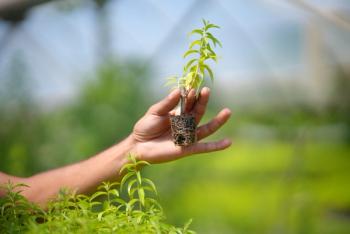
As global interest in Tongkat Ali grows, so has attention to how the plant is cultivated rather than simply protected from overharvesting. A study in Frontiers in Plant Physiology by researchers at Universiti Putra Malaysia examined how young plants respond to different light and water conditions, offering data to guide replanting and integrated planting systems.¹
Annie Eng, chief executive officer of HP Ingredients, US distributor of the Tongkat Ali extract LJ100 produced by Biotropics Malaysia Berhad, said the findings are "particularly relevant for cultivation strategies that aim to recreate forest-like environments," noting that "the research suggests that young plants require more open light conditions before gradual integration into shaded or multi-layered systems."²
The researchers measured plant height, stem diameter, biomass accumulation, and root-to-shoot ratios in young Tongkat Ali plants exposed to varying light intensities and water levels.¹
Excessive shading significantly reduced overall growth performance, the study found, and while plants shifted biomass allocation toward root development under low light, that adjustment did not fully compensate for the growth limitations shading imposed.
The authors identified 3 implications for replanting and intercropping: light penetration should be prioritized during early growth, irrigation should be calibrated alongside light conditions rather than treated as a separate variable, and root-to-shoot balance can serve as an early indicator of how well young plants are adapting.
Tongkat Ali has historically been collected from wild forest stands in Southeast Asia, and a 2024 review in the journal Plants noted that growing commercial demand for the species "exerted pressure on the wild resource, leading to the establishment of commercial plantations" and prompted government regulation aimed at sustainability.³
That same review pointed to cultivation and propagation research as a necessary complement to conservation policy, since protection alone does not resolve the practical question of how to grow the plant reliably outside its native forest conditions. The new growth-parameter data adds to that body of applied research rather than addressing conservation status directly.
The study is agronomic, not clinical, and its findings speak to cultivation practices rather than to extract potency, standardization, or efficacy. Eng connected the research to Biotropics' broader field program, including a Letter of Intent with the Association of Academic Officers of Universiti Putra Malaysia and a planting initiative, Denai 2.0, in which 130 Tongkat Ali saplings were planted at a forestry education center using designs informed by the research.²
That program builds on Biotropics' earlier participation in Malaysia's 100 Million Trees Campaign, a national reforestation effort the company says it completed ahead of schedule in November 2024.⁴
"Bridging research and real-world practice requires long-term commitment, not one-off activities," Eng said.² For manufacturers, the relevance lies less in any single data point and more in whether a supplier can show ongoing investment in reproducible growing methods, a harder claim to verify than a certificate of analysis but increasingly part of sourcing conversations.
References
1. Rowshanaie H, Jaafar HZE, Rowshanaie O. Conservation and domestication of young tongkat ali (Eurycoma longifolia Jack) via evaluating root and shoot traits by combining different light intensities and water levels. Front Plant Physiol. 2026;3:1702781. doi:10.3389/fphgy.2025.1702781
2. New published study identifies Tongkat Ali growth parameters for sustainability. HP Ingredients. August 20, 2026. Accessed August 21, 2026.
3. Sale S, Subramaniam S, Mad' Atari MF. Trends in the tissue culture techniques and the synthesis of bioactive compounds in Eurycoma longifolia Jack—Current status and future perspectives. Plants. 2024;13(1):107. doi:10.3390/plants13010107
4. Biotropics Malaysia and Universiti Putra Malaysia collaborate on Tongkat Ali sustainability study. Biotropics Malaysia Berhad. November 4, 2025. Accessed August 21, 2026.