

News|Articles|March 31, 2026
CRN Petitions US Supreme Court Over New York Supplement Sales Law
Author(s)Nicholas Saraceno
The trade association is challenging speech-based restrictions on supplement sales to minors, raising broader questions about First Amendment protections and regulatory precedent in the nutraceutical industry.
Advertisement
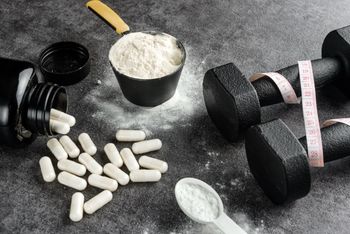
The Council for Responsible Nutrition (CRN) has petitioned the US Supreme Court1 to review a New York law that restricts the sale of certain dietary supplements to individuals under the age of 18. The law, which took effect in April 2024, prohibits retailers from selling supplements marketed for weight loss or muscle building to minors.
Unlike traditional regulatory approaches that focus on ingredient safety, the New York statute is based on how products are labeled or marketed. For example, a supplement with identical ingredients could be legally sold to minors if marketed for general wellness but restricted if labeled for weight loss or physique enhancement.
This distinction has become a central issue in the legal dispute, as it shifts regulatory focus from product composition to commercial messaging.
Why is CRN Asking the Supreme Court to Intervene?
CRN filed a petition for a writ of certiorari,2 asking the Supreme Court to review a decision by the US Court of Appeals for the Second Circuit that originally upheld the law. The organization argues that the statute represents a content-based restriction on commercial speech, potentially violating First Amendment protections.
According to Megan Olsen, SVP and general counsel at CRN, the case “goes to the heart” of how the government can regulate commercial speech and whether such restrictions must meet a high evidentiary standard.
“The Second Circuit allowed New York to justify the law without evidence that it will actually address the harms the state identified and without requiring the state to demonstrate that the remedy was ‘narrowly tailored’ so as not to chill legitimate protected speech,” she said. “The lower courts gave short shrift to the First Amendment by simply deferring to the New York legislature’s rationale for restricting speech. That approach significantly weakens long-standing First Amendment safeguards and opens the door to broader, unsupported limits on truthful communication. It also conflicts with precedent from the Supreme Court and other federal circuits.”
The petition seeks clarity on what level of evidence is required for states to impose restrictions tied to marketing claims, rather than product safety.
How Does the Law Differ From Traditional Supplement Regulation?
Historically, dietary supplement regulation in the United States has centered on ingredient safety, manufacturing standards, and labeling accuracy under federal frameworks such as the Dietary Supplement Health and Education Act (DSHEA).
The New York law represents a departure from this model by targeting marketing language rather than ingredient risk. CRN has emphasized that the statute restricts access, based solely on how products are marketed, not on whether they contain any harmful ingredients.
This approach has raised concerns among industry stakeholders that similar policies could be adopted elsewhere, potentially creating a patchwork of state-level regulations tied to claims rather than scientific evidence.
What Precedent Could This Case Set for the Nutraceutical Industry?
CRN and other stakeholders argue that the case could have far-reaching implications beyond New York. If the Second Circuit’s ruling stands, it may establish a legal precedent allowing governments to regulate product access based on marketing claims alone.
“If this decision stands, it creates a dangerous roadmap for regulating products using speech as a proxy rather than evidence of actual harm caused by the product,” noted Steve Mister, CRN’s president and CEO. “That has serious implications not just for our members, but for any industry that communicates truthful information about lawful products.”
By potentially creating a precedent for regulating products using speech as a proxy for risk, as opposed to relying on evidence of harm, this raises concerns about the increased scrutiny of structure/function claims; possible restrictions on product positioning and branding; and greater regulatory uncertainty at the state level
The case also highlights ongoing tensions between public health policy and commercial free speech, particularly as regulators seek to address concerns around body image, youth health, and supplement use.
How Does This Align With Broader Industry Trends?
The supplement industry is experiencing increased regulatory attention, particularly around claims substantiation and consumer protection. At the same time, brands are under pressure to deliver clinically validated, transparent messaging to differentiate products in a crowded marketplace.
This New York law, including the legal challenge surrounding it, illustrates how these trends are intersecting. On one hand, policymakers are exploring new ways to address perceived risks associated with certain product categories. On the other, industry groups are emphasizing the importance of science-based regulation and protection of truthful, non-misleading communication.
This dynamic is particularly relevant as emerging categories such as weight management, sports nutrition, and metabolic health continue to grow, often relying heavily on targeted marketing claims.
What Happens Next?
The US Supreme Court has discretion over whether to hear the case. If it grants certiorari, the Court could provide clarity on the constitutional limits of regulating commercial speech in the context of dietary supplements. If the Court declines to hear the case, the Second Circuit’s ruling will stand, potentially reinforcing the legality of speech-based restrictions at the state level.
Ultimately, for industry stakeholders, the outcome may shape how products are marketed, labeled, and sold, particularly in categories that attract heightened regulatory scrutiny.
References
1. CRN petitions US Supreme Court to review New York law restricting supplement sales based on marketing claims. Council for Responsible Nutrition. Published March 30, 2026. Accessed March 31, 2026.
2. Petition for a writ of certiorari. Council for Responsible Nutrition. Published 2026. Accessed March 31, 2026.
Advertisement
Related Content
Advertisement


Advertisement
Advertisement
Trending on Nutritional Outlook - Supplement, Food & Beverage Manufacturing Trends
1
Why Defatted Wheat Germ Is Drawing New Interest as a Whole-Food Spermidine Source
2
New Belief-Mapping Study Reveals Disconnect Between Consumer Perceptions and Expert Consensus on Carbohydrate Foods
3
Responding to Recent Supplement Research and Regulatory Developments
4
What Pretium Packaging's First Sustainability Report Signals for Nutraceutical Brands
5