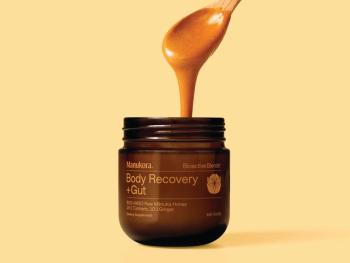
DolCas Biotech is featuring the turmeric-derived ingredient Curcugen in Mānukora’s Mānuka honey and Numin’s cognitive-support drink.
FDA called for public comments on the international drug scheduling of cannabis and cannabis-related substances in preparation for a meeting of the World Health Organization. In response, herbal experts and industry leaders urged the agency not to classify cannabis substances as Schedule I drugs.
Cannabis (Cannabis sativa) and its related extracts, such as CBD, continue to command the regulatory spotlight. In response to an FDA call for public comments on the global regulatory status of cannabis and cannabis-related substances, herbal experts and industry leaders have urged the agency not to classify cannabis and cannabis-related substances as Schedule I drugs.
In April,
By gathering public comments here in the U.S., FDA is collecting information that will be used as the U.S. prepares for the upcoming ECDD meeting. As a party to the United Nations treaty, the 1971 Convention on Psychotropic Substances, the U.S., via the U.S. Department of Health and Human Services, is obligated to provide the international community with any new information about a substance that could impact the way the substance should be scheduled or controlled internationally.
How is the ECDD likely to regard cannabis-related substances at its 40th meeting and especially CBD, which the committee will be formally scrutinizing for the first time? The committee’s 39th report, following its November 2017 meeting, indicates that the committee’s early, informal reviews of CBD have not raised alarm over the safety of CBD.
In the
In public comments sent to FDA, herbal leaders such as the American Herbal Products Association (AHPA; Silver Spring, MD) and the nonprofit American Botanical Council (ABC; Austin, TX) supported these early conclusions of the ECDD.
“AHPA supports the ECDD’s conclusion that CBD requires no international drug scheduling as an individual substance and recommends and requests that the United States also express support for this position,” wrote AHPA president Michael McGuffin in
“AHPA is aware of no information that suggests that extracts or preparations of Cannabis containing almost exclusively CBD are any more subject to abuse or dependence than CBD itself and therefore recommends and requests that the United States support a position to acknowledge that such extracts and preparations should not be scheduled under any international drug control convention to which the United States is a party,” McGuffin wrote.
In its
“Based on what clinical research and numerous case studies indicate as the promising medical benefits of cannabis as a medicine, we recommend that cannabis be taken off Schedule I of the Controlled Substances Act in the U.S. to allow for more thorough investigation of its therapeutic potential,” Gafner wrote.
He further noted that the Controlled Substances Act defines Schedule I drugs as drugs that have a high potential for abuse and that have no currently accepted purpose as a medical treatment. He also pointed out that, when the law was enacted, there was “scarce” information on the medical value of cannabis, whereas today there are “a number of clinical studies” on cannabis and cannabis isolates in relation to various health conditions.
Because cannabis is listed as a Schedule I drug, researchers must first undergo onerous hurdles, such as applying for Investigational New Drug applications and getting research sites registered by the Drug Enforcement Administration before studies can commence, Gafner wrote. “In addition, the cannabis has to be obtained through [the National Institute on Drug Abuse], which still uses the University of Mississippi as the only federally approved source that is allowed to legally grow cannabis for government-approved research studies,” he said.
All of these impediments, Gafner wrote, have limited researchers’ ability to study the health-promoting properties of cannabis products, writing that “the Schedule I status of cannabis is one of the most significant impediments to carry out such research.”
Because the studies that have been done do point to significant potential therapeutic properties of cannabis, Gafner wrote, “it seems clear” that “Schedule I of the Controlled Substances Act no longer applies to cannabis.”
The future status of cannabis and cannabis-related extracts like CBD on the global stage and within the ECDD remains to be seen. Here in the United States, indications are high that the legal doors for hemp-derived substances may soon open up through other avenues. In April, U.S. senators proposed the
Also read: