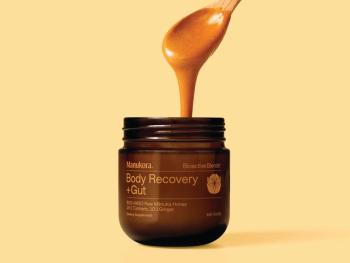
DolCas Biotech is featuring the turmeric-derived ingredient Curcugen in Mānukora’s Mānuka honey and Numin’s cognitive-support drink.
Many are pegging this year as the year for brain health.
If there’s one health concern to keep tabs on in 2016, it’s brain health. With many ingredient advances in the last year alone, and emerging launches in related markets, many are pegging this year as the year for brain health.
Lisa Buono, client insights principal, healthcare vertical, for market researcher IRI, says, “IRI believes that supplements to improve and maintain brain health will grow rapidly because consumers of all ages increasingly have optimal brain health and performance as a desired goal and because supplements may be the only category, at least in the short term, that can provide products to that end.”
IRI, which tracks retail sales in U.S. brick-and-mortar food/drug/mass, club, dollar, and military stores, says sales of supplements specifically marketed for brain health (excluding omega-3) grew nearly threefold last year to $40 million. Notably, this figure does not count sales in specialty stores like GNC or Vitamin Shoppe, nor internet/direct mail or sales of omega-3 products, so sales “are quite likely much higher in total,” Buono says. (If omega-3 products that also make heart-health claims are included, the total could be as high as $400 million, she adds.)
Still, "the staggeringly high growth rate of the brain-health items that we are tracking is quite telling,” she continues. “Consumers want these products, that’s for sure.”
Shoring up brain health is all about prevention as people watch elderly loved ones deal with conditions like dementia or Alzheimer’s disease. Latest U.S. Census Bureau data estimate that by 2050, the
But other consumer types are wrapping their minds around brain health now. Innova says sports-nutrition powders showed the highest global increase in brain health–related launches in 2015.
There is lots of opportunity here for dietary supplements. “Currently, in the nonprescription spectrum of the market, there are a handful of nutritional supplement brands aimed at brain health, but this area remains largely underserved by the OTC industry,” says IRI in a white paper recently released together with research firm Kline, called “Brain Health: Unlocking White Space Potential for the OTC Industry.”
The paper notes that brain-health supplements are still just a fraction of the total vitamin and mineral supplements market. Some of the supplements already on the market include Cebria by Ever-Neuro Pharma, Prevagen by Quincy Bioscience, Alpha Brain by Onnit Labs, Focus Factor by Factor Nutrition Labs, Procera AVH by Procera Health, and Neuro Sonic (a beverage) by Neuro Drinks. IRI says sales of Prevagen and Procera AVH alone grew nearly 500% and 300%, respectively, in 2015.
Of the many brain-health supplement ingredients available-including ginseng, Ginkgo biloba, omega-3, huperzine A, amino acids, B vitamins, choline, vitamins A, C, D, and E...the list goes on-market researcher Euromonitor International is keeping an eye on several specifically, says Chris Schmidt, senior analyst, consumer health. These include B vitamin nicotinamide, as well as huperzine A and ashwagandha, both of which are in dietary supplements but also expanding into sports. In related news, late last year, Israeli supplier Enzymotec said it is now positioning its
In fact, it seems like all ingredient suppliers are
As expected, the elderly are a huge focus. Horphag Research has a brand-new study out showing that its
Elsewhere, Israeli supplier Lipogen (Haifa, Israel) unveiled a new
The list goes on. Even grape juice brand Welch’s, which last year added to its role by becoming a supplier of grape ingredients, is getting in on the action. In December, the company announced a new study indicating its
Will marketers take advantage of all this innovation? If they aren’t, they should be.
“There is significant upside market potential in the area of brain health, which remains a largely untapped OTC market with meaningful treatment gaps even in the prescription market as well,” the IRI/Kline white paper states. “White-space opportunity exists that OTC marketers can fill in brain health because demand is critical, with a high number of consumers seeking solutions which are not adequately addressed by currently available OTC or prescription drugs."
"OTCs/nutritional supplements can bridge the gap with products aimed at prevention of dementia/memory loss and that help maintain brain health. There is ample evidence such products will be increasingly demanded by consumers across multiple generations," it concludes.
READ NEXT
Also read:
Editor-in-Chief
Nutritional Outlook magazine
jennifer.grebow@ubm.com
over 10 years ago
Probiotic Firms Venture Further Into the Allergy Marketover 10 years ago
Healthy Snack Trends: Bean Chips, Bars, Protein, Seaweed, and Moreover 10 years ago
The Price of Dietary Supplement Contract Manufacturingover 10 years ago
What Does Contract Manufacturing Dietary Supplements Cost?over 10 years ago
Energy Shot Sales Are Slumping. Do Energy Shots Still Have a Chance?over 10 years ago
Which Flavors Are Trending in Energy Drinks?over 10 years ago
Energy Drink Makers Turn to Natural Botanical Ingredients