NNB Nutrition says the finished product is the first to carry the certification using its creatine ingredient, which also holds Informed Choice certification and has undergone third-party impurity testing.
Building muscle is important, but maintaining it is crucial as one ages. As a result, there is a growing demand for ingredients that help preserve muscle to help maintain an active lifestyle and quality of life.
Protecting and maintaining one’s muscle health is a growing focus in the active nutrition space as active supplement consumers get older and realize the importance of healthy muscle mass for sustaining an active lifestyle and good quality of life.
“Muscle health has become a central pillar of healthy aging, weight management and total wellness. More than aesthetics or athletic performance, strong muscles power metabolic health, mobility, independence and quality of life at every stage,” explains Shawn Baier, MS, MBA, vice president of business development, TSI Innovative Products Division (Missoula, MT). “Age-related muscle loss begins as early as age 30. Left unchecked, it limits mobility and robs people of the activities they love. Proactive strategies such as resistance training, optimal protein intake and targeted nutrition can help preserve muscle well into later life.”
This new perspective on muscle health means that interest in popular active nutrition mainstays like protein remains high, but there’s also opportunity for other innovative and clinically-researched ingredients that offer a point of differentiation.
“Interest in protein continues to grow across all age groups, including older consumers looking to address healthy aging concerns,” says Vaughn DuBow, senior director, product portfolio marketing, health & wellness, at ADM (Chicago). “A 2025 ADM Outside Voice global survey finds that 58% of baby boomers look to increase protein intake in their diet. The survey also shows that this generation is seeking to support their everyday vitality and performance (36%), improve their longevity (32%), and build/maintain muscle mass/strength (29%). Protein supplementation, whether through traditional supplements or formats like nutritional bars and beverages, play a key role in these efforts.”1
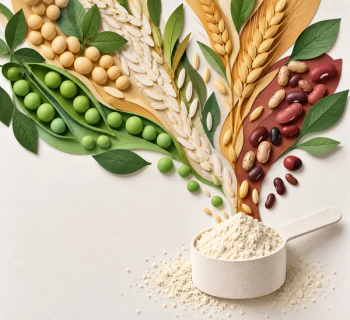
There’s no shortage of protein options on the market. Dairy-based options such as whey remain dominant, but plant-based solutions continue to grow in popularity, and are becoming more competitive. “Now, as more consumers progressively look for ways to both increase their protein intake and diversify their protein sources, product developers are turning to plant-based options like soy and pea protein,” says DuBow. “In fact, 86% of global plant-forward consumers believe it is healthier to get protein from a wider variety of sources.”2
When it comes to plant-protein, soy and pea protein are among the most popular, and the closest nutritionally to whey. DuBow explains that soy is one of the few plant-based proteins that is considered a “complete protein,” as it has a Protein Digestibility Corrected Amino Acid Score (PDCAAS) of 1. This means that it can deliver the desired branched-chain amino acids (BCAAs). Pea protein is also rich in BCAAs, but not quite at the level of soy, though pea protein has better organoleptic qualities, and can be easily blended with other proteins to achieve higher PDCAAS and deliver the necessary BCAAs.
While protein is very important for muscle maintenance and recovery, DuBow notes that a growing body of evidence supports the use of other ingredients such as pre- and probiotics to enhance the effects of protein. This is called the “gut-muscle axis.” For example, ADM offers a blend of probiotics that has been clinically shown to support post-exercise oxidative stress.3 Their spore-forming probiotic DE111 has also been shown to support healthy inflammation in athletes.4 Additionally, DuBow mentions that using dietary fiber can help elevate the nutritional value and sensory qualities of high protein formulations.
There are a variety of other ingredients on the market that have been shown to promote protein muscle health on their own, while also offering complementary benefits. For example, HMB (β-Hydroxy β-methylbutyrate), such as TSI’s branded myHMB, works by increasing protein synthesis, and reducing protein breakdown, says Baier. “In combination with vitamin D3, myHMB has been shown to support muscle health independent of exercise. We also have clinical study data demonstrating its efficacy during periods of long-term fasting and intermittent fasting,” he explains.5
Baier also notes that age can impair the body’s ability to use amino acids for protein synthesis, making myHMB a valuable complement to protein formulations. “Simply consuming more dietary protein may not improve maintenance of muscle mass. myHMB helps protein perform more optimally by activating protein synthesis and protecting against excess protein breakdown,” says Baier. “Three grams of myHMB added to plant protein supports better muscle maintenance than plant protein alone.”
Omega-3s have also been shown in research to show similar benefits. One recent pre-clinical study showed that a formulation from Epax (Aalesund, Norway) was able to significantly mitigate muscle injury, demonstrating its value to support muscle recovery.6 “We know that there are various mechanisms of actions including anti-inflammatory, membrane fluidity and effects on energy producing mitochondria,” says Derek Tobin, PhD, business development and clinical science manager for Epax. “Therefore, a mix of both EPA and DHA is probably preferable and relatively high amounts of omega-3 maybe beneficial since exercise is a significant acute form of stress on the body.”
Besides acting as an anti-inflammatory agent and antioxidant to reduce soreness after hard exercise, Tobin notes that omega-3s play an important role in sensitizing muscles to the dietary intake of protein during exercise, providing an indirect anabolic effect by increasing muscle protein synthesis.7
Omega-3s from krill oil have similar benefits, but the way the nutrient is bound and delivered is somewhat different, says Yunpeng Ding, director of research and development, human nutrition, at Aker BioMarine (Lysaker, Norway). “Krill oil delivers omega-3s in phospholipid form that has been shown to improve absorption and incorporation into cell membranes,” explains Ding. “In addition, krill oil contains nutrients like choline that is important for acetylcholine synthesis and muscle contraction.”
Omega-3s can also help maintain muscle health during disuse. “During times of muscle disuse, for example due to normal inactivity or severe activity as seen after injury, muscle loss occurs due to a reduction in muscle protein synthesis,” explains Tobin. “This tips the net effect towards muscle loss. Omega-3 supplementation results in accumulation in the muscle which mitigates the reduction in muscle protein synthesis, making the loss of muscle less dramatic.”8
During aging, one’s ability to regain muscle when restarting exercise is also slowed, which is called anabolic resistance. “Omega-3 supplementation can mitigate anabolic resistance and improve the responsiveness of muscle to training. This places omega-3 supplementation as a potential dietary component of training in the elderly,” says Tobin.9
Herbal ingredients like Pycnogenol may also aid muscle health through a number of pathways. In addition to the ingredient’s ability to support healthy inflammation, Pycnogenol also supports nitric oxide products. “[NO] regulates vasodilation and improves blood flow to muscle tissue, enhancing oxygen and nutrient delivery during activity and recovery,” explains Sébastien Bornet, vice president, global sales & marketing, Horphag Research (exclusive worldwide supplier of Pycnogenol, based in Hoboken, NJ). “One study proved that this mechanism relieved muscle cramps and pain in athletes after taking 200 mg per day for just four weeks. Additionally, Pycnogenol’s potent antioxidant polyphenols neutralize free radicals generated during exercise, helping to protect muscle fibers from oxidative damage. Together, these actions support endurance, muscle function, and faster recovery which are benefits that have been documented in both regular, active individuals and athletes.”10
Some ingredients are more versatile than others, allowing formulators to combine them into a single formulation. This has obvious advantages. “Tailored convenience is key for consumers looking to lead active lifestyles,” says DuBow. “Nearly 60% of global consumers are interested in products customized to meet their nutritional needs. An influx of new product innovation in convenient, enjoyable and personalized formats like nutritional bars, gummies, wellness shots, stick packs, carbonated soft drinks (CSDs) and ready-to-drink (RTD) shakes is helping more people from all walks of life support muscle growth and recovery.”11
Omega-3s can be a bit more difficult to work with, but the interest in muscle health and healthy aging offers manufacturers a new way to market these ingredients as a complement to other popular ingredients on the shelf. Omega-3s are already a popular cardiovascular health solution, and these additional benefits can encourage more sales and higher compliance among aging consumers looking for more than just cardiovascular benefits.
References
(11) FMCG Gurus. Top Ten Trends for 2025. 2024.
about 1 year ago
Understanding the magnesium marketabout 1 year ago
Joint health supplements poised for mainstream acceptanceabout 1 year ago
The gut barrier: Digestive health’s next frontier