AuraFen, BILVORA, and IMBE debut at SupplySide Global 2026, and the company will also highlight its CaFi digestive health ingredient.
At The Outlook on Active Nutrition, Sara C. Campbell, associate professor and director of the Department of Kinesiology and Health at Rutgers University, explored the dynamic interplay between gut health, exercise, and brain function.
The intricate relationship between the gut, brain, and exercise is a rapidly evolving field of study. As research progresses, it's becoming clear that the gut is not just a digestive organ but a complex ecosystem that plays a crucial role in overall health, including athletic performance and cognitive function. Sara C. Campbell, associate professor and director of the Department of Kinesiology and Health at Rutgers University, spoke at The Outlook on Active Nutrition, elucidating that complex relationship. She focused on the bidirectional relationship between exercise and the gut microbiota, the gut-brain axis and its impact on exercising individuals, and what research shows about what nutritional strategies work and do not work for supporting the gut-brain axis. This talk helped to demystify a complex ingredient category and direct the focus of brands’ research and development.
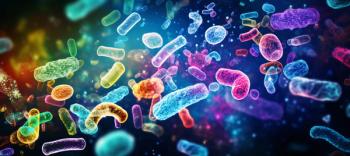
The terms microbiota and microbiome are often used interchangeably, but the distinction is important, argued Campbell. The microbiota refers to the microorganisms themselves—the "bugs," as she calls them.In contrast, the microbiome encompasses the entire habitat of these microorganisms. This includes not just bacteria, but also archaea, eukaryotes, and viruses, as well as their genomes.
Despite the vast number of microbes—estimated at 1012 trillion—researchers have only identified about 2,000 genus and 5,000 species.This highlights just how much is still unknown about the functional aspects of these microorganisms and the field is still in its developing stages.
The link between exercise and the gut microbiota is not a one-way street. Exercise can influence the composition of the gut microbiota, and in turn, the gut microbiota can affect exercise performance. Campbell cited early studies have shown that exercise can lead to an increase in certain beneficial microbes, particularly butyrate producers. These microbes, such as Fecalibacterium prausnitzii, Roseburia intestinalis, and Allobaculum species, have been observed in both animal and human studies.1 A notable study showed a near twofold increase in butyrate production as a result of exercise.2,3 This change in the microbiota is an adaptation to exercise, and it must be maintained through continued activity, as the effects can reverse when training stops.4
Conversely, an intact gut microbiota is essential for exercise. In animal studies where the gut microbiota was depleted using antibiotics, the animals experienced reduced exercise capacity, including shorter running distance and faster exhaustion compared to those with a healthy microbiota, even though they were still training.5This suggests that the microbiota plays a critical role in supporting exercise capacity. The exact mechanisms are still being explored, but research points to potential impacts on blood flow to skeletal muscles and mitochondrial function. For instance, a reduction in blood flow to the hind limb and a decrease in mitochondrial oxidative phosphorylation markers were observed in antibiotic-treated, trained animals.5 This implies a complex gut-skeletal-muscle-mitochondria axis, said Campbell.
It is important to note that while exercise can induce positive changes, it doesn't always alter the diversity of the microbiota. The beneficial changes seem to be more robust in younger populations compared to older ones. Regardless of age, exercise must be done consistently for the beneficial effects to be seen.
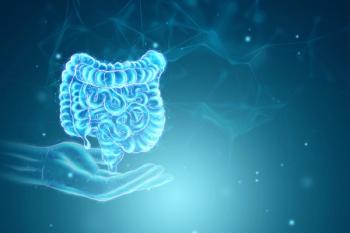
Campbell explained that there are a number of pathways through which the gut can influence the brain, in what we call the gut-brain axis.6 One is called the vagus nerve which is a major connection between the gut and brain that has been studied in animals using a procedure called vagotomy, in which the nerve is severed. There is also a connection via the immune system through lymphoid tissues. Campbell explains that 70% of the lymphatic system is located in the intestines. Tryptophan metabolism is another connection as bacteria metabolizes precursors into metabolites such as the neurotransmitters serotonin, epinephrine and dopamine. In fact, specific microbes can be associated with the production of these metabolites. Enterococcus faecium, Eubacterium limosum, Blautia producta, Proteus vulgaris, Hafnia alvei some bacilli, and Escherichia coli, for example, are linked to dopamine.7 Finally, there is also the enteric nervous system, which is often referred to as the second brain due to the large number of nerves and plexuses responsible for regulating function such as digestive absorption, and its connection to other tissues.
While exercise can positive impact gut health, Campbell points out that excessive exercise can cause leaky gut syndrome, particularly in hot, humid environments.8 What happens is that the tight junctions of the intestinal lining are degraded, allowing bacteria and microbial derivatives into circulation. This can lead to systemic inflammation, and these pathogens can also potentially cross the blood-brain-barrier.
When it comes to supporting gut health and the gut-brain axis in athletes, there are two main nutritional strategies that are typically employed are the use of probiotics and prebiotics.
According to Campbell, the use of probiotics, or live microorganisms, for athletic performance is mixed. There are specific microbes associated with an active gut, namely Bifidobacteria, Faecalibacterium, Prevotella, Roseburia, Bacteroides, and Akkermansia, and Villanella. However, the use of probiotics has not been shown to improve the gut health of athletes.9
“The literature is very clear…that there is often no efficacy in utilization of probiotics for leaky gut in athletes,” said Campbell. “There may be, if you use a multi-strain [product], but for at least three or more months, and that's a maybe. So, I don't know that probiotics is the right direction we need to go into.”
Instead, Campbell pointed to prebiotics as the most promising solution, as it feeds the so-called bugs.10
“Prebiotics provide…the precursors for the gut bugs to ferment and create some of these microbial-derived metabolites that do [their] thing,” explained Campbell. “And as you suspected, butyrate is becoming a target. Butyrate seems to be very positive. It can increase these junction proteins, in particular…It increases energy for the
colonocytes and keeps them healthy and proliferating. It increases mucus production and immunoglobulin A, which which keeps the immune system healthy, the good bacteria, commensals thriving, the pathogenic bacteria low. And it also tends to reduce inflammation and oxidative stress within the colon. And a healthy gut means a healthy gut brain communication.”
Clearly, the gut is incredibly complex, and as Campbell noted, we are just barely at the tip of the iceberg as far as the science goes. Based on what we do know, the potential for new product development is still very promising, but industry needs to be realistic about what these products can and cannot accomplish, managing consumer expectations, and delivering benefits that are actually tangible.
References
This article was created with assistance from Gemini. The content has been reviewed and edited by Sebastian Krawiec, Managing Editor. For more information on the extent and nature of AI usage, please contact us.