Why responsible innovation means asking whether yesterday's formulations still reflect today's best science—not just launching the next new ingredient.
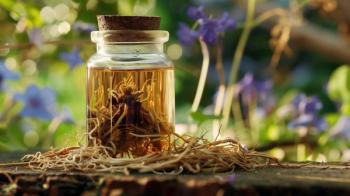
The study tested two doses of the asparagus racemosus root extract Xeya Modern Shatavari for its effect on symptom reduction and quality of life.
A recently published
In this 120-day trial, 75 female participants, ages 40 – 50 years with mild to moderate VMS received either 50 mg or 100 mg of the extract daily or a placebo. Changes in menopausal Rating Scale (MRS) scores were the primary measurement, along with Hot Flash Weekly Weighted Score (HFWWS), Menstrual Symptom Questionnaire (MSQ) score, follicle count via ultrasonography, and serum levels of follicle-stimulating hormone (FSH), luteinizing hormone (LH), anti-Müllerian hormone (AMH), and 17β-estradiol (E2). Skin and hair quality were also self-reported by the participants.
On day 120, scores of MRS scores and HFWWS were significantly reduced compared to baseline and placebo, with the total MRS score in the 50 mg group reduced by 51.4% and the total MRS score in the 100 mg group reduced by 73%, while the placebo group decreased by 22.8%.
Ovarian follicle count also increased in both treatment groups, and a dose-dependent change of FSH, LH, AMH, and E2 levels was also seen.
Overall, the researchers stated the extract was demonstrated to be a safe and effective intervention for the symptoms and regulation of hormones. “The study provides the first clinical evidence of CL22209’s dual central and peripheral endocrine modulation, positioning it as a novel functional food for integrative women's health support during the menopausal transition,” they concluded.
“Women’s concerns have been neglected for too long,” stated Eric Anderson, managing director NXT USA, in a September 4 press release. “This study shows real benefits for women dealing with perimenopausal symptoms, dramatically improving quality of life for the participants,” said. “This is the NXT standard of comprehensive clinical evidence—incorporating our comprehensive ‘four pillars of validation’ in study design that measures patient reporting, physician assessment, biomarkers and physical tests. This is the most comprehensive study on shatavari published to date.”
Xeya Modern Shatavari is extracted using a traditional method involving water and alcohol, the press release explains, with consistency testing for batches. “This is what a modern extract should be,” said Anderson. “It’s a fully standardized extraction, giving a more concentrated, quality material.”
Earlier this year, NXT USA
References