Botanical Innovation and Product Development Pathways in Menopause Management
Key Takeaways
- Demand for “natural” menopause options is reinforced by WHI-driven HRT caution, creating a durable market for botanicals positioned as complementary or alternative midlife strategies.
- Formulation credibility hinges on transparent dosing and validated standardization; multi-ingredient proprietary blends often cannot meet per-ingredient efficacious doses and adulteration risks persist.
At The Outlook on Women’s Wellness, Jennifer Greer, ND, Med, explained how functional botanicals address sleep, mood, and metabolism for menopausal transition phases.
The women’s health sector is undergoing an expansion, primarily driven by a rapidly aging global population and more women in menopause phases. At The Outlook on Women’s Wellness, industry consultant Jennifer Greer, ND, Med, presented Evidence-Based Botanicals in Menopause Management, a discussion on how menopause encompasses diverse symptom domains, highlighting evidence-based, phase- and symptom-specific use of botanicals as complementary strategies to hormone therapy in women’s midlife care.
Why Are Botanicals Gaining Traction?
Consumer demand is shifting toward natural, traditional, and hormone-free product architectures, Greer explains. This transition is rooted in the legacy of the Women’s Health Initiative (WHI) study, which resulted in a long-standing black-box warning on conventional hormone replacement therapy (HRT). Although those clinical restrictions have recently begun to lift, Greer states that an entire generation of women lived without HRT options, and an entire generation of healthcare practitioners was trained to view hormone therapies as dangerous. “Botanicals are something that is natural,” she explains. “They are steeped in tradition and ritual. With AI and the explosion of technology and all of these things that are new in our lives, people are really drawn to ritual and tradition and are interested in incorporating that into some slower phases of life.”
Credibility Challenges in the Category
Greer explains that despite robust commercial expansion, product developers must navigate credibility hurdles in the category. For example, while proprietary blends may offer some credibility, they are not all formulated in a way that actually offers benefits. For instance, a proprietary blend totaling 750 milligrams that lists 14 distinct botanical ingredients cannot realistically be supplying each extract at its full, clinically validated dose for human efficacy.
She notes that adulteration remains a persistent risk as well. In ashwagandha supplies, for example, products marketed exclusively as pure root extracts are sometimes found to contain leaf tissue. While leaf material has historical precedent, mislabeling the product as pure root is misleading for the consumer.
Major Applications and Sourcing Specifications for Key Botanicals
The presentation categorized the primary clinical applications for botanicals into distinct symptom domains. For nutraceutical developers, aligning the correct plant species, standardization profile, and dosing with these domains is essential.
1. Menstrual-Related Symptoms and Cycle Irregularities
Early perimenopause often introduces sudden menstrual cramps, severe PMS, or cycle irregularities.
- Shatavari (Asparagus racemosus): Emerging as a dominant ingredient across the female lifespan. It features an influx of recent human clinical evidence supporting its use from early reproductive years through post-menopause. Formulators must note that studied dosages vary widely based on the concentration of its active constituents, shatavarins, making manufacturer-specific standardization critical.
- Vitex (Chasteberry): Acts on the brain-to-ovary pathway by modulating prolactin. It stabilizes the second half of the menstrual cycle and supports endogenous hormone production without acting as a direct phytoestrogen.
- Ginger: Serves as an effective, anti-inflammatory "rescue" ingredient for sudden perimenopausal menstrual cramps and cycle-linked nausea. Human trials demonstrate equivalency to over-the-counter pain medications.
2. Mood, Stress, and Emotional Well-Being
Hormonal volatility places women at a high risk for new-onset mild-to-moderate depression, anxiety, and irritability.
- Saffron: Modulates serotonin and other neurotransmitters to support mood, cognitive health, and general perimenopausal symptoms.
- Ashwagandha: Modulates the brain-to-adrenal axis to manage cortisol and stress. Emerging research suggests it also positively influences estrogen and progesterone levels.
- Hops: Contains 8-PN (8-prenylnaringenin), a potent phytoestrogen modulator. While historical data supports its use for mood and sleep, animal models indicate long-term benefits for post-menopausal bone density and cardiovascular protection.
3. Metabolic and Cardiovascular Health
The post-menopausal drop in estrogen alters body fat distribution toward metabolically active central fat, elevating risks associated with lipid levels, insulin sensitivity, and cardiovascular health.
- Black Garlic: Aged garlic that concentrates S-allyl-cysteine (SAC). It down-regulates the specific enzyme required for internal cholesterol production, promoting healthier lipid profiles.
- Bergamot: Standardized bergamot fractions uniquely increase high-density lipoprotein (HDL) cholesterol while reducing waist circumference.
- White Mulberry Leaf: A specialized botanical that blocks the enzymes responsible for breaking down complex carbohydrates.
4. Cognitive Function and Sleep Support
- Bacopa: A cognitive adaptogen. A 2024 study demonstrated that while daily use supports long-term memory and learning, a single dose can improve focus and concentration within three hours, allowing for both acute and chronic product positioning.1
- Sage: Possessing anti-oxidant, estrogenic, and anti-inflammatory properties, sage can be used for acute cognitive improvement.2 Formulators can utilize two distinct species: Salvia officinalis (validated for both cognitive decline and hot flashes) and Salvia lavandulifolia (focused on cognition), either together or paired with other botanicals.
- Valerian Root: Standardized to valerenic acid, this root supports deep sleep architecture.
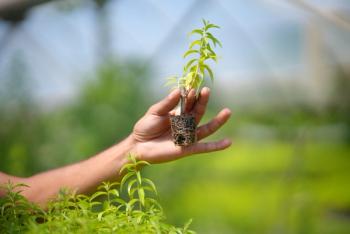
- Lemon Verbena: Naturally stimulates endogenous melatonin production rather than introducing exogenous hormones.
5. Sexual Health and Vasomotor Symptoms
- Fenugreek: Standardized extracts at 600 mg daily clinically elevate testosterone and estrogen levels, directly improving libido.
- Damiana: A traditional aphrodisiac thought to induce nitric oxide production and local blood flow, though robust clinical trials are sparse.
- Siberian Rhubarb: It selectively binds to estrogen receptor beta to stabilize central nervous system temperature regulation.
- Soy Isoflavones & S-Equol: Soy isoflavones affect hot flashes and protect bones, but most women in the US lack the microbiome capability to metabolize them into their active form. Formulating products by directly supplying S-Equol, or boosting soy blends with it, bypasses this metabolic bottleneck.
- Black Cohosh & Red Clover: Black cohosh acts non-estrogenically on serotonin and potentially dopamine receptors, pairing well with the phytoestrogenic pathways of soy or red clover.
- Pycnogenol: A trademarked pine bark extract that reduces hot flashes and night sweats at a low dose of 60 mg.
Closing Thoughts
One of the core insights from this presentation is that the term "menopause" is frequently misused in the commercial marketplace as a single catch-all condition. “Understanding that those are distinctive biological phases that have distinct needs is really important when you're formulating in this category,” Greer explains. Furthermore, developers must account for specific delivery mechanics and also educating consumers on formulations in order to build trust, offer products that they can incorporate into their lives, and gain repeat purchases.
This article was created with assistance from AI. The content has been reviewed and edited by Erin McEvoy, Associate Editor. For more information on the extent and nature of AI usage, please contact us.
References

- Eraiah MM, Shekhar HC, Joshua L, Thomas JV. Effect of Bacopa monnieri Extract on Memory and Cognitive Skills in Adult Humans: A Randomized, Double-Blind, Placebo-Controlled Study. J Psychiatry Cogn Behav. 2024; 8:168. https://doi.org/10.29011/2574-7762.000068
- Kennedy DO, Scholey AB. The Psychopharmacology of European Herbs with Cognition-Enhancing Properties. Curr Pharm Des. 2006; 12(35): 4613 - 4623. doi: 10.2174/138161206779010387