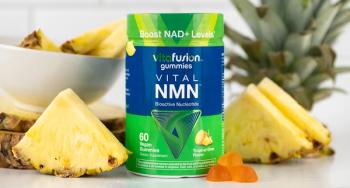
Piping Rock Health Products has launched a 300-mg NMN gummy under its Vitafusion brand, arriving less than a year after the FDA reversed its position on whether the ingredient could legally be sold as a dietary supplement.
This year, ingredients and supplement categories at higher risk of adulteration include: selective androgen receptor modulators (SARMS), phenibut, tianeptine, higenamine, and certain high-profile botanical ingredients.
Each year, there are ingredients and supplement categories at higher risk of adulteration. This year, those top of mind include: selective androgen receptor modulators (SARMS), phenibut, tianeptine, higenamine, and certain high-profile botanical ingredients.
SARMS are synthetic steroid-like drugs mimicking the effects of testosterone and showing up in bodybuilding products in recent years. In the U.S., SARMS are not permitted in dietary supplements. SARMS are also on FDA’s radar; the agency has
Trade associations also
Tianeptine, a substance some companies are selling illegally as supplement products to treat opioid abuse, also hit the radar in November 2018 after
Last year, NSF International (Ann Arbor, MI) identified higenamine’s
The NSF et al. researchers tested a selection of supplement products on the market, including weight-management, sports, and energy supplements, and detected higenamine in what they called “unpredictable and inaccurately labeled dosages”-a problem especially for athletes looking to avoid any exposure to WADA-banned substances.
“At NSF International, we share the industry concern about adulterants like SARMS, phenibut, tianeptine, and higenamine,” John Travis, senior research scientist, NSF International, tells Nutritional Outlook.
FDA and dietary supplement industry leaders want to get unscrupulous companies and hazardous and illegal products off the market. FDA Commissioner Scott Gottlieb, MD, recently stated that the agency is reexamining its existing authority to police the dietary supplements market. In December 2018, Gottlieb
Adulteration in the botanicals market is always a concern. Adulteration happens in the botanicals market for reasons including supply chain shortages, the high cost of some botanical ingredients, and also the high volume of some ingredients, says Stefan Gafner, PhD, chief science officer for the American Botanical Council (ABC). Gafner is also technical director of the
The Botanical Adulterants Prevention Program (BAPP) is a joint program of nonprofits ABC, the American Herbal Pharmacopoeia, and the University of Mississippi’s National Center for Natural Products Research. It provides critical educational resources such as BAPP’s
BAPP has published 48 peer-reviewed publications so far. Over the past year alone, BAPP has shared adulteration information on a variety of botanical ingredients, including ashwagandha, maca, tea tree oil, saw palmetto berry and extract, cranberry, turmeric, boswellia resin, pomegranate, and ginkgo leaf extract.
Nutritional Outlook asked Gafner which botanical ingredients are at greatest risk of adulteration in 2019. He says: “Obviously we cannot answer this with certainty, but there are a few indicators that may point to an increased adulteration risk. Among those are supply chain shortages, high-cost botanical ingredients, and also high-volume ingredients. It is quite difficult to foresee where supply chain shortages may be an issue, since this depends on weather conditions, disease, and market success, among other factors. However, with regard to supply chain shortages, saw palmetto berry extracts could be affected by this, and possibly rhodiola root and root extracts. Other botanical ingredients that fall into this category are those that have seen a fairly dramatic increase in sales over the past years, such as extracts of turmeric, boswellia, ashwagandha, or elderberry.”
“Botanical ingredients where the raw material is relatively expensive, such as bilberry extract, cordyceps, or cranberry extracts with high contents of proanthocyanidins, are regularly among those where we see adulteration issues, just because of the financial incentive. The same is true for many essential oils. Ginkgo and turmeric are some of the high-volume commodities where adulteration has persisted,” Gafner concludes.
NSF’s Travis also highlights ginkgo concerns, noting that the U.S. Government Accountability Office
“With ginkgo, this continues to be a problem of intentional adulteration due to the financial advantage of adding cheaply sourced ingredients, despite all of the publicity it has received over the years,” Travis says. “Ginkgo will continue to be adulterated because of the tempting economic incentives driven by the use of cheaply sourced adulterant ingredients.”
Gafner says he’s “optimistic” that educating the public about adulteration will make a difference. He says, “With the raising awareness of the problems, I am optimistic that the picture will improve over the next year.”
BAPP is advising manufacturers what to do if raw materials are defective. Last year, BAPP released a draft of a
Michael Levin, founder of Health Business Strategies LLC, who was also the primary author of the SOPs and who is BAPP’s chief consultant on the SOPs, says that part of the review is related to potential language that could, ultimately, be included in contracts between a supplier and a buyer as a best practice. Levin calls this aspect “mission critical” and “at the very heart of this project.” He continues: “It defines the agreements between supply chain partners as they relate to quality, adulteration, dispute resolution, and the like. In contrast, the [current] draft SOP merely outlines a proposed procedure for implementing the legal agreements contained within the supply contract. Perhaps most importantly, and most relevant to your readers, the contract language mandates that if an ingredient/lot is irreparably defective and cannot be lawfully remediated for any use anywhere, that the parties agree to lawfully destroy that ingredient lot. This assures that this lot can never be resold into the supply chain. This is a vast improvement over the current situation.”
And back to the overall risk of adulteration in the market, NSF’s Travis says that, as in previous years, categories at highest risk remain the weight management, sports, and sexual enhancement markets. “Consumers have increased use of these products over the years, especially in the weight-loss category,” he says. “This has resulted in greater revenue for brands and provided an incentive for unscrupulous brands to adulterate their products with pharmaceuticals, untested stimulants, and other substances, which may not have any data to support safe use."
2019 Ingredient Trends to Watch for Food, Drinks, and Dietary Supplements:
over 7 years ago
2019 Dietary supplement equipment manufacturing updateover 7 years ago
Botanicals for blood sugar supportover 7 years ago
Three cheers for chicory!over 7 years ago
Immune-health ingredient update 2019over 7 years ago
CBD and the need for quality control