Trade groups say the law's broad criteria could restrict access to supplements with uses beyond weight loss or muscle building.
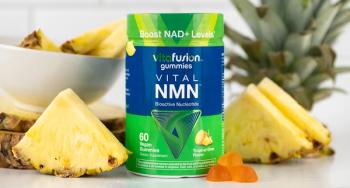
The U.S. Food and Drug Administration (FDA) has determined that beta-nicotinamide mononucleotide (NMN) is not a dietary ingredient citing the drug preclusion clause of the Food Drug and Cosmetic Act (FD&C).
The U.S. Food and Drug Administration (FDA) has determined that beta-nicotinamide mononucleotide (NMN) is not a dietary ingredient citing the drug preclusion clause of the Food Drug and Cosmetic Act (FD&C). FDA made this determination in a response to a New Dietary Ingredient Notification (NDID) from
This decision by FDA comes not long after the agency published its
The present situation with NMN is only the latest example of how the drug preclusion clause negatively impacts the industry. A long-running example is cannabidiol (CBD), and before that was red yeast rice. One of the most frustrating aspects is the fact that Investigational New Drugs (IND) are not always made public, and therefore dietary supplement brands may not know they are competing with a pharmaceutical company in a race to market. The rule in essence protects the interests of pharmaceutical companies at the expense of dietary supplement companies that have also invested greatly in research and development, as well as the filing of NDINs as it is their responsibility to do so.
“These decisions to broadly invoke drug preclusion to protect the profits and monopolies of drug companies do not serve a public safety objective. FDA’s reasoning and its refusal to provide a date certain when the authorization as a drug occurred just further raise concerns that it is protecting pharma’s interests over consumer welfare,” said Steve Mister, president and CEO of the Council for Responsible Nutrition (CRN; Washington, D.C.), in a press release. “We’ve already seen FDA’s use of drug preclusion to deny marketing of CBD in dietary supplements and to stop sales of N-acetyl-L cysteine (NAC). Rather than provide clarity to the drug preclusion situation or establish a transparent process for obtaining exceptions to that rule, FDA has invoked enforcement discretion narrowly to NAC more than two years after concluding that it is not a dietary ingredient. The industry is still waiting on the promised formal exemption for NAC. This is precisely why we didn’t offer FDA an easy way out in our citizen petition on NAC. The announcement this week on β-NMN just perpetuates the uncertainty around the drug preclusion issue and furthers FDA’s course of plucking individual ingredients out of the supplement marketplace without warning. Manufacturers, retailers, and consumers are left in limbo each time this happens.”
The drug preclusion clause as it was established may no longer be relevant to the current marketplace. The dietary supplement industry is evolving rapidly, and it needs room to be able to innovate. “I think the intent of the [drug] preclusion [clause] was to not have ingredients that were purely in the drug space come back and [be used] as a supplement,” said Daniel Fabricant, president and CEO of NPA to Nutritional Outlook. “There’s a world where things are both drugs and dietary supplement ingredients at the same time. It’s only going to increase…so there’s got to be a workable solution here.”
Indeed, drugs like Vascepa have been developed to treat cardiovascular disease but can still coexist on the market with dietary supplement Eicosapentaenoic Acid (EPA), despite coming from the same source. Why shouldn’t the same be true of hemp-derived CBD or NMN? Additionally, dietary supplement manufacturers often have less incentive to submit an NDIN than a drug company has to submit an IND. INDs are confidential, while NDINs are eventually published, and brands fear that FDA is not doing enough to protect their
While FDA may choose to exercise enforcement discretion in these situations, as it has for CBD and NAC, this is not a solution to the underlying problem. If the drug preclusion clause is not amended in some way, it’s conceivable that more and more dietary supplements will be subject to drug preclusion, unfairly barring them from the market.