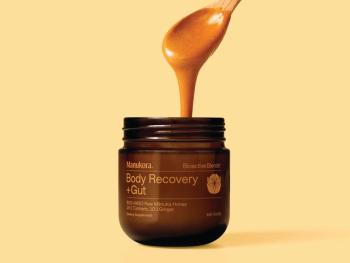
DolCas Biotech is featuring the turmeric-derived ingredient Curcugen in Mānukora’s Mānuka honey and Numin’s cognitive-support drink.
Here’s why the 2023 Farm Bill must clarify CBD’s legal status for the food, beverage, and supplement industries, writes Scott Mazza of Vitality CBD.
In 2018, cannabidiol (CBD) became suddenly legalized under
In the forthcoming five-year update to the cornerstone agricultural policy, CBD producers and consumers deserve oversight and more information regarding issues like CBD’s dietary supplements usage, purity and potency thresholds, and the issue of delta-8 THC. Let’s explore.
The Question of CBD and Dietary Supplements
It’s important to keep in mind that food and drinks containing CBD have never actually been approved by FDA. Instead, the 2018 Farm Bill meant that CBD derived from hemp containing less than 0.3% tetrahydrocannabinol (THC) by dry weight was no longer considered a controlled substance. However, this does not mean the resulting products were FDA-approved.
While you may have seen products for sale—from candies to drinks at gas stations and wellness stores—they exist in legal limbo. And this uncertainty is a headache for much of the industry. In the year after the 2018 Farm Bill,
But there is regulatory movement on the horizon. As
It remains to be seen what happens from here, but some are already disappointed. The agency is signaling that it will not allow CBD to be marketed as a dietary supplement. This is an unfortunate development, as early studies show CBD’s potential benefits for
The Problem with Purity and Potency
The CBD industry’s lack of regulation and enforcement has resulted in producers having free rein over the purity and potency of their products. As a result, many products are untested for these parameters, carry incorrect label information, and exceed legal contaminant limits.
This is not just a case of a few bad apples. Nearly half of the products tested in
These findings emphasize the urgent need for regulation—especially when users are accessing these products for their health. Let’s hope that the upcoming Farm Bill holds producers accountable for what they create. At a minimum, regulators should set purity and potency thresholds and include funding for enforcement. Further, on the industry side, producers should pressure each other to publish third-party lab results and confirm that their products do what they say they do. This will help to allay fears of product contamination; after all,
The Uncertainty of Delta-8
Finally, there’s the question mark lingering over delta-8 THC. While the psychoactive compound is technically legal under federal law, it is banned in 20 states due to concerns that its legalization is a loophole.
Delta-8 THC is not found naturally in significant amounts. So, it is instead
In a ruling last year,
Further, the bill should sort out the legality of the broader range of synthetic psychoactive cannabinoids. Beyond delta-8 THC, legal hemp is also used to create delta-10 THC, THC-O, THC-A, THC-X, and a slew of others. Again, regulators need to give better assurances to consumers and producers of these compounds.
Safeguard Users and Improve Outcomes with the 2023 Farm Bill
The 2018 Farm Bill was by no means perfect. But, it did open the door to an entire industry and a new way of wellness. It’s now up to legislators to acknowledge the issues, step up, and deliver certainty in the 2023 Farm Bill.
As a producer in this industry, I hope FDA reconsiders its position regarding CBD as a dietary supplement. There are countless cases of this compound—when created safely by professionals—offering holistic health benefits. Moreover, there is an argument to be made that the safety and quality of products can be adequately addressed with regulation rather than an entirely separate approvals pathway.
Whatever happens, let’s look forward to ongoing and considered discussion between the industry and the regulators. Only then can we help evolve this landmark legislation into something which best safeguards users and improves health outcomes.
About the Author
Scott Mazza is the cofounder and COO of